Coral Husbandry
Graduating to a marine aquarium introduces layers of biochemical complexity unseen in freshwater systems. The foremost priority shifts from simple nitrogen management to the meticulous oversight of salinity, alkalinity, calcium, and magnesium levels.
The Foundation: Live Rock
Unlike freshwater environments that rely on canister or sponge filters for biological processing, marine environments depend heavily on "live rock." These highly porous, calcareous structures collected from or seeded in the ocean are teeming with micro-fauna and deep-dwelling anaerobic bacteria.
While the surface of the rock facilitates the standard ammonia-to-nitrate conversion, the anoxic depths of the rock structure allow specialized bacteria to perform denitrification—breaking down nitrates into harmless nitrogen gas that simply bubbles out of the aquarium.
Crucial Marine Parameters
| Parameter | Target Range | Biological Purpose |
|---|---|---|
| Specific Gravity (Salinity) | 1.024 - 1.026 | Maintains osmotic balance across fish gill membranes and coral tissues. |
| Calcium (Ca) | 400 - 450 ppm | Provides the fundamental building blocks for stony coral skeletal growth. |
| Alkalinity (dKH) | 8.0 - 10.0 dKH | Buffers pH against rapid swings and assists in coral calcification. |
| Magnesium (Mg) | 1250 - 1350 ppm | Prevents calcium and alkalinity from precipitating out of the solution unnecessarily. |
Shedding Light on Photosynthetic Invertebrates
Corals are not plants; they are colonies of tiny animals called polyps. However, most reef-building corals harbor symbiotic algae known as zooxanthellae within their tissues. This algae photosynthesizes light, providing the coral with up to 90% of its required nutritional energy.
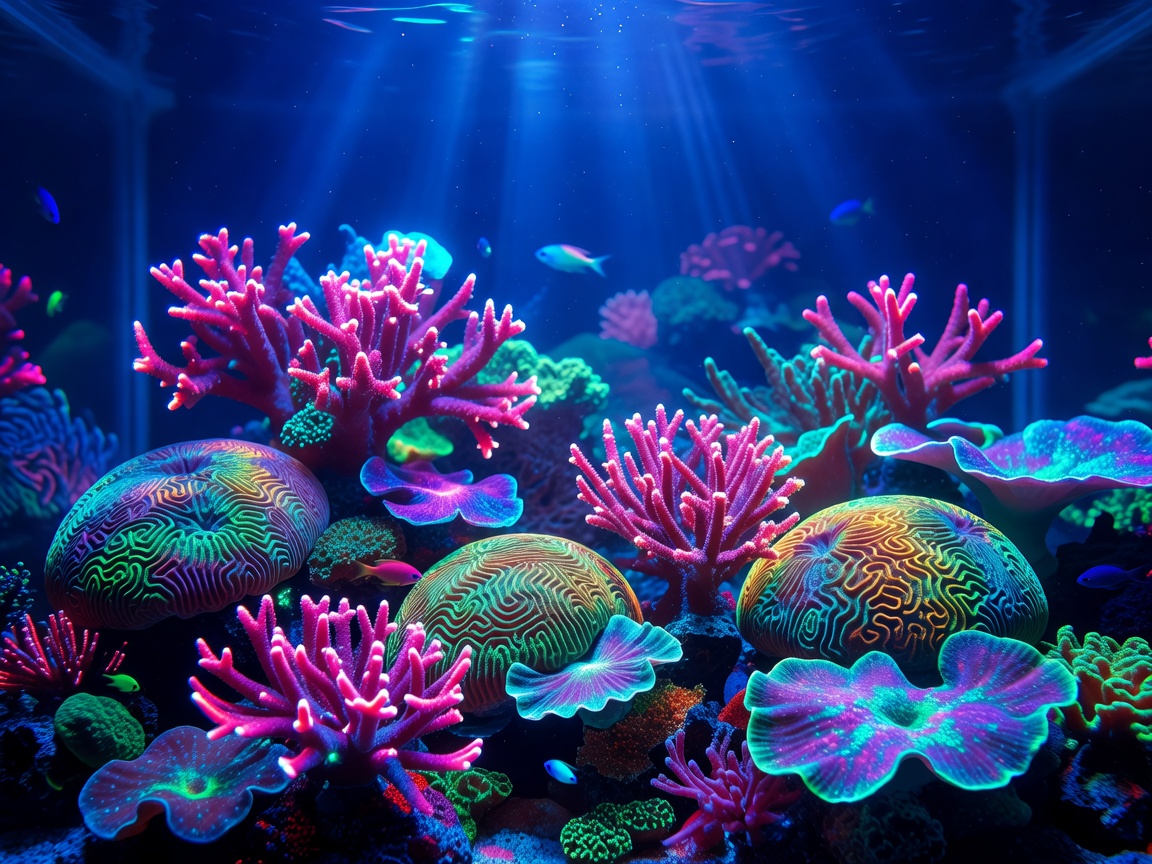
For successful coral husbandry, high-intensity, specific-spectrum lighting is non-negotiable. Actinic wavelengths specifically stimulate photosynthesis in deep-water marine organisms while forcing the vibrant, fluorescent pigmentation that makes reef tanks visually spectacular.